
AI’s Capacity Race Meets Biotech’s Regulatory Reality
October 17th, 2026 · Daily Wall Street Alerts Editor · 5 minute read
The AI trade is often sold as a clean line from a bigger model to a bigger stock price. The actual chain is messier: equipment, factories, power, funding, customers and margins all have to show up on time. Meanwhile, biotech headlines can swing from a new indication to a costly legal settlement in a single news cycle. We would rather follow the underlying business than repeat Wall Street’s favorite slogan.
This weekend, three developments deserve attention: ASML’s strong results and capacity constraint, a large U.S.-Japan-backed fab plan involving GlobalFoundries, and sharply different biotech stories from ImmunityBio and Liquidia.
ASML (ASML) — The AI buildout has a bottleneck upstream
ASML supplies lithography equipment used in semiconductor manufacturing. Its third-quarter 2026 results were strong: the company reported record sales of €11.7 billion and net income of €5.0 billion, and forecast full-year sales of €44 billion to €45 billion. Management said customers were raising equipment-demand forecasts based largely on the expected size and duration of AI investment.
The most consequential detail may not be the quarter just reported. ASML said its currently planned supply for 2027 and 2028 would not fully meet customer demand and that it was exploring ways to increase 2028 capacity. Some customers have discussed orders for 2029 and 2030. That gives the bull case a real industrial backbone: chipmakers are planning beyond the next product cycle, and ASML sells equipment at an upstream point in the supply chain.
Still, a customer forecast is not the same as a delivered order. More capacity requires suppliers, parts, trained labor and flawless execution; the company itself flags order delays or cancellations, export rules and supply-chain constraints as risks. For investors, this is a high-quality business story with a demanding expectation set: if customers slow capital spending, the supposedly inevitable AI buildout can still disappoint.
GlobalFoundries (GFS) — Subsidy-backed expansion, with a long runway to prove it
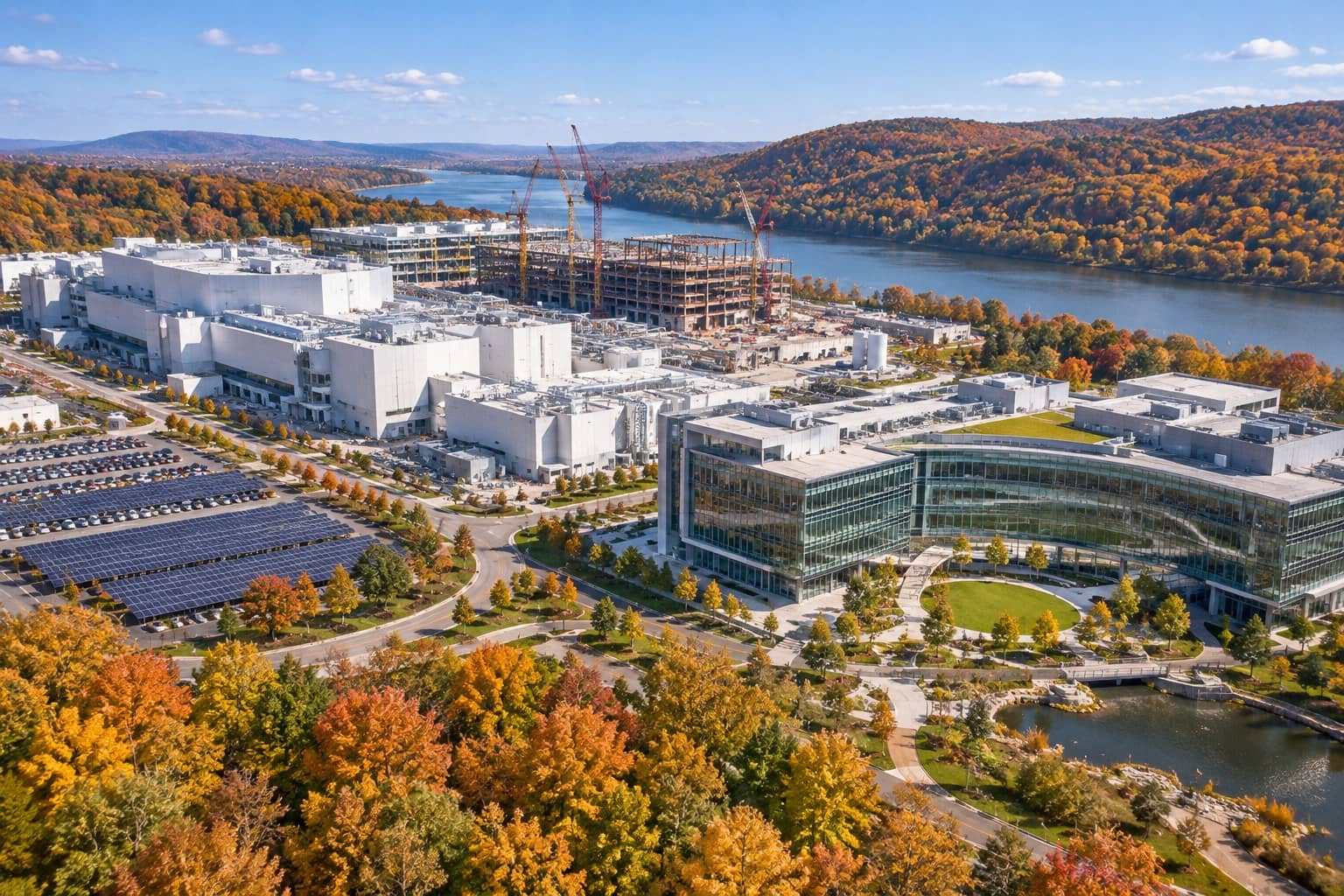
GlobalFoundries makes semiconductors and operates manufacturing facilities, including its Malta, New York site. The company said it was selected to provide the technology and operate two proposed new fabs there under a U.S.-Japan initiative that could provide up to $21 billion. The first project is expected to receive about $10 billion and come online in 2029; the proposed second fab depends on additional funding.
The idea is strategically attractive: more domestic manufacturing capacity can serve customers who care about supply-chain resilience, and government-backed spending may help lower the hurdle for a massive build. GF expects the first fab to add roughly 900,000 wafers of annual capacity once fully operational.
But “up to” is not a check already in the bank. Construction stretches years into the future, the second fab is conditional, and the company warns that expected funding could be delayed or withheld and planned expansions may not proceed as expected. Even a successful factory needs customers, utilization and returns on invested capital. We would follow the funding milestones and construction schedule rather than count the full headline amount as committed revenue.
ImmunityBio (IBRX) — An expanded label is progress, not a blank check
The FDA expanded the indication for ImmunityBio’s Anktiva, used with BCG, to include adults with BCG-unresponsive non-muscle-invasive bladder cancer with high-grade papillary-only tumors. The prior indication covered a population with carcinoma in situ, with or without papillary tumors.
The FDA’s explanation matters. It extended the indication by extrapolating efficacy previously demonstrated in a single-arm study of 77 patients, rather than citing a new randomized trial in the papillary-only group. In that earlier study, the complete-response rate was 62%; the FDA also lists important treatment risks and warns that delaying cystectomy can allow metastatic bladder cancer to develop.
That is meaningful regulatory progress and potentially broadens the addressable patient population. It does not guarantee commercial uptake, long-term outcomes or a favorable stock return. We would keep the distinction between an FDA label expansion and a proven financial trajectory firmly in view.
Liquidia (LQDA) — A commercial path remains, but it just got more expensive
Liquidia and United Therapeutics reached a settlement resolving six pending lawsuits. Liquidia said Yutrepia would remain available for pulmonary arterial hypertension, but it agreed to remove the pulmonary-hypertension-associated-with-interstitial-lung-disease indication from the label and not appeal a patent ruling. The company disclosed $380.7 million in total settlement payments across 2026 and 2027.
The bull case is that Yutrepia keeps selling for PAH, and settlement removes a long-running source of legal uncertainty. But there is no free lunch: the company faces substantial payment obligations, loses the PH-ILD indication, and still has uncertainty around FDA review of its label supplement and future product development. Management said it expected to fund the payments with cash on hand and ongoing Yutrepia sales; that plan depends on both the cash balance and the sales trajectory holding up.
Wrap-up: Read the footnotes after the headline
ASML’s numbers and customer commentary support the reality of ongoing semiconductor investment, but the company still has to meet a difficult capacity challenge. GlobalFoundries has a significant opportunity, but public funding language is not the same thing as completed construction. ImmunityBio has an expanded approval, while Liquidia has preserved one market opportunity at a material settlement cost.
These are not interchangeable “AI and biotech winners.” We would size each position for its own risks, separate confirmed operating performance from forward-looking announcements and avoid paying for outcomes that have not happened yet. Headlines move quickly. Capital intensity, clinical evidence and legal bills do not disappear when the next headline arrives.
— The Daily Wall Street Alerts Team
This newsletter is for informational purposes only and does not constitute investment advice. Always conduct your own due diligence before making any investment decisions.