
The Newest Company in This Email Was Founded in 1875
November 3rd, 2026 · Daily Wall Street Alerts Editor · 9 minute read
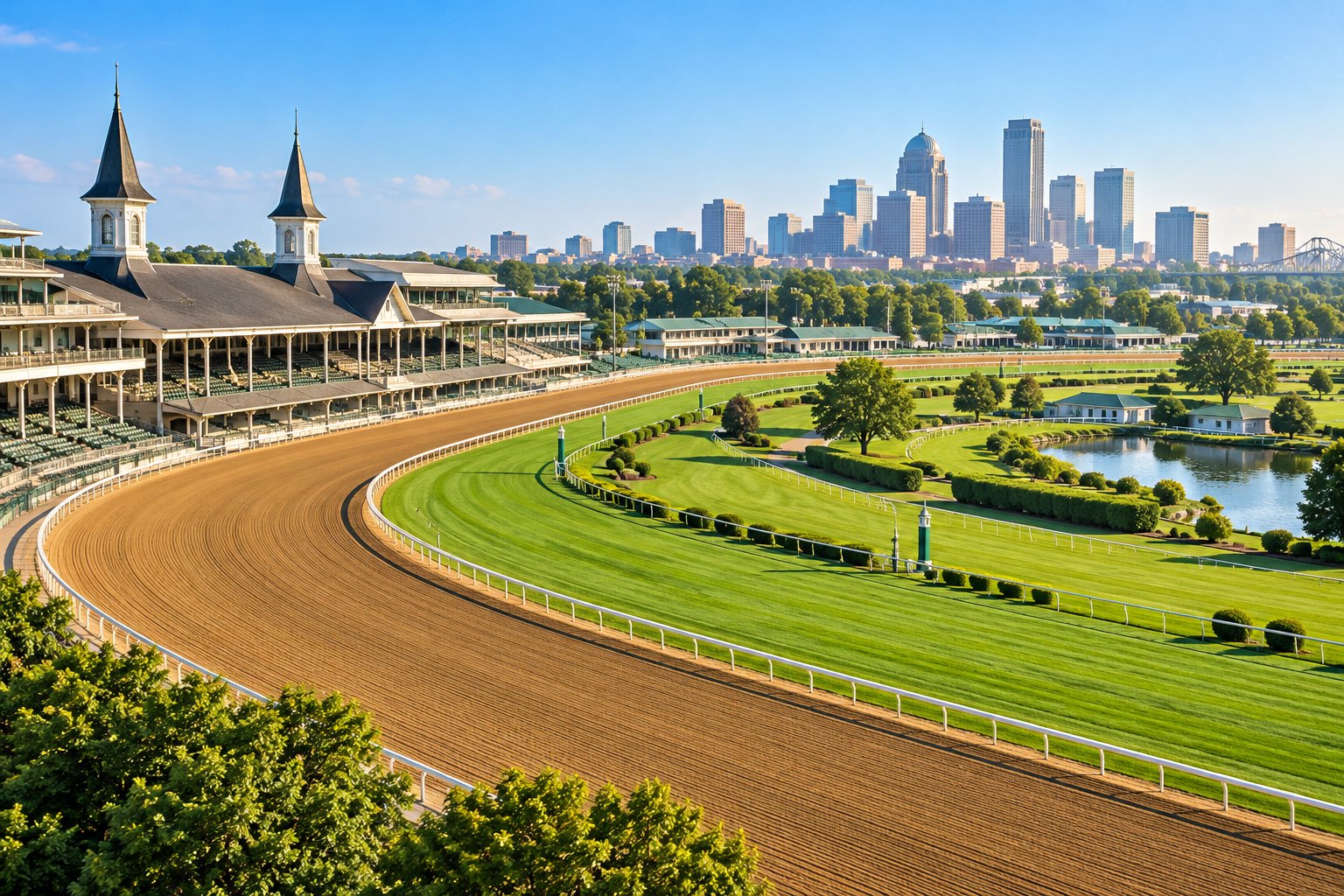
Three businesses older than the light bulb just moved to buy back a tenth or more of themselves.
Somewhere in your kitchen there’s a drawer full of gadgets that were each, briefly, the future. The avocado slicer. The egg separator. The salad chopper that was going to change everything. Most of them need batteries. None of them get used.
And then there’s the cast-iron skillet. Nobody ever filmed an infomercial for it. It sat in your grandmother’s kitchen, it sits in yours, and it will sit in your grandkids’ — doing the job, every day, decades after the gadgets go to the yard sale.
The stock market has been shopping the gadget aisle all year. You know the aisle we mean. But last month, while the crowd argued over the newest thing, three of the oldest companies in America quietly decided the best thing to buy was themselves. A fire-hydrant maker born in 1857. A safe maker born in 1859 that grew up into ATMs. And the racetrack that has run the Kentucky Derby since 1875 — four years before Edison got a light bulb to glow.
Combined age: 487 years. Combined buyback capacity, authorized in the past two weeks: about $1.33 billion — each program big enough to retire roughly a tenth or more of its company.
Let’s take them one at a time, oldest first -
Mueller Water Products, Inc. (MWA) — Recent Price: $23.84
| Recent Price | $23.84 |
| Buyback Action | On October 22, the Board of Directors added $300 million to the share repurchase authorization — about $334.5 million total, nearly a tenth of the company at tonight’s price — and raised the quarterly dividend 14.3% in the same announcement. |
Breakdown: In 1857, a German immigrant named H. Mueller opened a shop in Decatur, Illinois. A hundred and sixty-nine years later, the company that carries his name makes the fire hydrants on American corners and the valves and gates that control the water underneath them. It is about as unglamorous as a business gets — and that’s the appeal. America’s water mains are old and leaking, and when a city replaces a hydrant or a valve, it buys from the company whose founder set up shop before the Civil War. Nobody postpones fixing a broken water main until the economy feels better.
The quarter behind this decision was a record. June-quarter sales rose 4.1% to $395.9 million, adjusted earnings per share jumped 47% to $0.50, and cash-profit margins expanded by more than four percentage points. Management raised full-year profit guidance. (One honesty note: about six cents of that quarter’s earnings came from a one-time tax benefit — the underlying engine was strong, just not quite that strong.)
Now the balance sheet, because it’s the quiet star here: Mueller holds $495 million in cash against $453 million of total debt. Read that again — the company has more cash than debt, with nothing coming due until 2029. When CEO Paul McAndrew says the expanded authorization lets Mueller “repurchase shares opportunistically when we believe they are undervalued,” the vault is genuinely full.
And the timing says something too. The stock sits at $23.84 — within about 14% of its 52-week low, down roughly 23% from its $31 high — while earnings run at records. That’s about 15 times next year’s expected earnings. The S&P 500: about 21. Plus a dividend just raised 14.3%, payable November 19.
The honest risks? The growth is coming from price, not volume — unit volumes actually slipped last quarter, and McAndrew himself names slower new-home construction as a headwind. The neighborhood has a draft: just last week, water-equipment peer Xylem cut its outlook because utilities are postponing projects. The street is lukewarm — six analysts, a consensus Hold, average target $27. This board bought back only $30.5 million all last year, so the new authorization is a tenfold refill of an envelope they’ve barely used. And know the calendar: Mueller reports its fiscal fourth quarter on November 4 — tomorrow. A soft report, and cheap gets cheaper.
Diebold Nixdorf, Incorporated (DBD) — Recent Price: $54.73
| Recent Price | $54.73 |
| Buyback Action | On Tuesday, October 27, the Board of Directors authorized a new $250 million repurchase program — the largest in company history, roughly an eighth of the company at tonight’s price — announced the very morning the stock fell 13% on a guidance cut. |
Breakdown: Diebold started making safes and bank vaults in 1859. Today it’s one of the world’s biggest makers of ATMs and the machines that count, recycle, and guard physical cash — plus, increasingly, the self-checkout lanes at your grocery store. The quarter it just reported was, on the surface, fine: revenue grew 5% to $994 million, the retail business grew 16% for its fourth straight quarter of double-digit growth, and adjusted earnings of $1.34 a share beat estimates.
Then came the asterisk that cost shareholders 13% in a day. Diebold cut its full-year outlook — adjusted earnings to $4.50–$4.85 a share from $5.25–$5.75, and expected free cash flow by roughly a quarter. The culprit is almost funny, if you don’t own the stock yet: memory chips. The AI buildout has made computer memory scarce and expensive for everyone else, and every ATM and checkout lane carries some. CEO Octavio Marquez called out “elevated component costs, particularly around memory” — about a $25 million hit this year — made worse by selling more lower-margin retail hardware. The fix is underway: management says 95–98% of retail contracts will carry cost-escalator clauses by year-end.
Here’s what the board did with the markdown. Rather than hide, it authorized its third buyback in 21 months: the company’s first-ever $100 million program in February 2025 (completed), $200 million last November (nearly complete), and now $250 million. CFO Tom Timko: the new program provides “additional flexibility to return capital.” These aren’t gestures — they finish what they start. And after the fall, the stock costs about 8 times next year’s expected earnings. The S&P 500: about 21.
The honest risks? Plenty — size this one like the turnaround-in-progress it is. The cut was real: GAAP net income fell to $6.6 million from $41.1 million a year ago as expenses rose, and memory prices answer to the AI cycle, not to Diebold. Free cash flow was negative last quarter, and the $250 million program is bigger than a full year of the lowered cash-flow guide — expect it to take time. Remember the deeper history, too: this company went through Chapter 11 in 2023, and the shareholders from before that restructuring were essentially wiped out — proof of how hard this industry can bite. Only three analysts cover it, and their $98 average target was set before the cut — expect that number to shrink. But a board that finished its last two programs just wrote its biggest check yet, at a price near the 52-week low. The safe maker thinks its own stock is the thing worth locking up.
Churchill Downs Incorporated (CHDN) — Recent Price: $98.55
| Recent Price | $98.55 |
| Buyback Action | On Wednesday, October 28, the Board of Directors approved a new $750 million repurchase program — about 11% of the company at tonight’s price — alongside a record quarter and a 7% dividend raise. One piece of fine print up front: the new program includes, rather than adds to, the $306 million left under the old one, so the genuinely fresh capacity is about $444 million. |
Breakdown: The first Kentucky Derby ran in 1875, and the company that owns the track has outlived every fad since. But today’s Churchill Downs is bigger than two minutes in May: it operates record-setting historical-racing venues across Kentucky and Virginia, regional casinos, and TwinSpires, its online wagering arm.
The quarter was a record on every line that matters: revenue of $696 million, cash profits of $264 million, and net income of $80 million — more than double a year ago — with adjusted earnings of $1.23 a share beating the $1.13 expected. Through nine months, the company generated $603 million of free cash flow — $8.59 per share, nearly 9% of tonight’s stock price, in nine months. The dividend went up 7%, the 16th consecutive annual increase.
And this board doesn’t just authorize — it spends: $48 million repurchased last quarter and another $76 million in the first four weeks of October, before asking for the bigger allowance. The bolder move is what’s funding the next leg: Churchill is selling nine of its regional casinos, with deals expected to be announced by year-end, to cut debt from 3.8 times cash profits to under 3.0 — and to keep buying stock and reinvesting in the crown jewel. Early signs on that jewel: 2027 Derby ticket demand is running ahead of last year’s pace, and a new Thoroughbred Championship Series with the New York Racing Association debuts next spring.
The market noticed — the stock jumped about 9% on the news to $89.40, and it has kept climbing since, to $98.55. Even so, it sits 17% below its 52-week high of $118.35, at about 14 times next year’s expected earnings against the S&P’s 21, and the twelve covering analysts rate it a Strong Buy with an average target of $125.75 — about 28% above tonight’s price.
The honest risks? You’re paying about 20% more than buyers did before Wednesday’s news. The casino sales that power the debt plan aren’t signed yet — management expects announcements by year-end, but it also concedes higher rates and a nervous consumer are weighing on buyers; until those deals close, this is a leveraged company at 3.8 times. Virginia profits actually fell last quarter as a new competing casino opened in Petersburg and a new state racing-day tax took effect — regulation taketh as well as giveth. And a gambling company lives on discretionary dollars. The $750 million is permission, not a receipt — though $124 million of actual purchases since July says this board uses its pen.
— The Daily Wall Street Alerts Team
This newsletter is for informational purposes only and does not constitute investment advice. Always conduct your own due diligence before making any investment decisions.